Emily Barbo

Symposium Speaker: James Rattling Leaf

The Salazar Center is proud to announce that James Rattling Leaf, Principal, Wolakota Lab LLC will be joining us in Denver, Colorado for the fifth-annual International Symposium on Conservation Impact.

James serves as a guide and inspiration to organizations to work more effectively with Indigenous Peoples for a more equitable world in his role as a global Indigenous Consultant and Principal of the Wolakota Lab, LLC. He has over 25 years’ working with the U.S. federal government, higher education institutions and non-profits. He specializes in developing programs that utilize the interface between Indigenous people’s traditional knowledge and western science. He sees a greater vision of human knowledge that incorporates the many insights of human cultures and provides a context for our better understanding of the planet and the world.

James is a founding member of the Group on Earth Observations (GEO) Indigenous Alliance that was established at GEO Week 2019 in Canberra, Australia to foster a continued, effective, respectful, and reciprocal relationship with GEO and representatives of indigenous communities from around the world.  He was born on the Pine Ridge Indian Reservation and is a citizen of the Oceti Sakowin, Sicangu Lakota. His higher education comes from Sinte Gleska University.

Resources

What is Indigenous Traditional Ecological Knowledge and Why Does it Matter?


Register for the Symposium


Shoshanna Dean

Shoshanna Dean

A Seat at the Table: Why Young Leaders Matter in Conservation Convenings

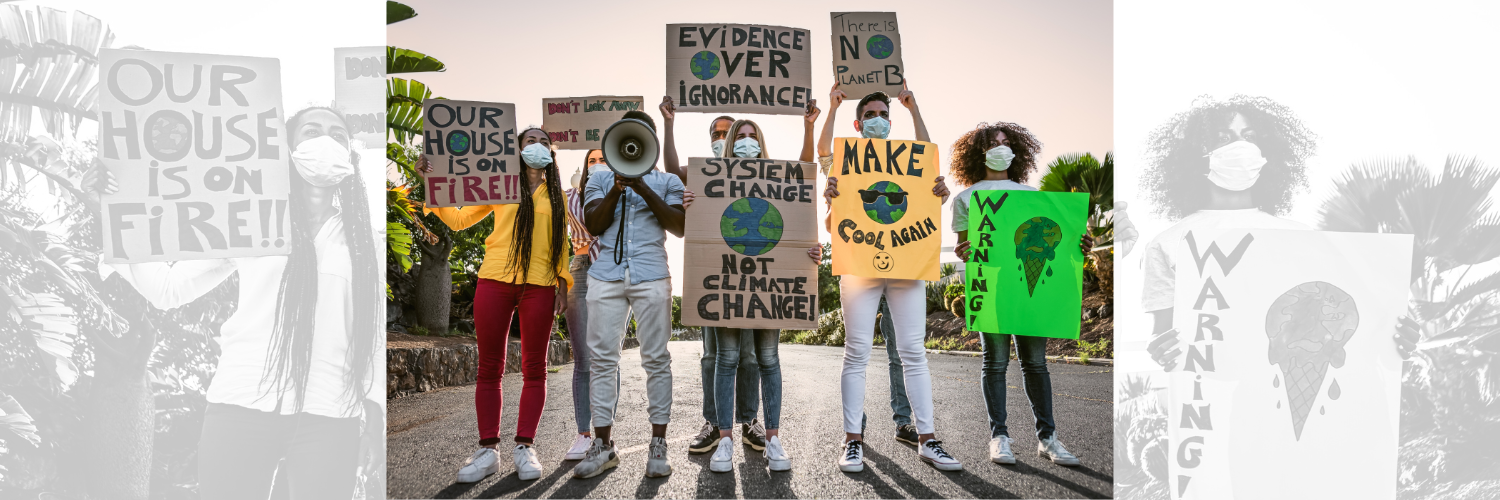
If you follow along with environmental news, you may have seen recent headlines ranging from a group in Montana advocating that the state’s policies violated their constitutional right to a healthy and clean future, to the vandalism of fine art to bring attention to the climate crisis, to Greta Thunberg challenging world leaders at the United Nations Climate Action Summit to do more about climate change. What do these have in common? They feature young leaders around the world who are seeking meaningful, systemic change to ensure a safe and healthy future for themselves and the generations to come. 

Why Young Leaders Matter 

According to the United Nations, the world is home to 1.8 billion young people between the ages of 10 to 24- which is the largest generation of youth in history. Within this generation, there is increasing awareness, frustration, and mobilization of youth demanding world leaders follow through on the promises they are making from local legislation to federal initiatives, all the way to the global stage. A study from the Pew Research Center found that Millennial and Gen-Z Americans stand out “for their high levels of engagement with the issue of climate change,” explained by feelings of anxiety about the future and an urgency to reverse biodiversity loss and carbon emissions. 

As an early career conservationist, myself, on the way out of the bucket determined as “youth”, I am consistently impressed by the creative and innovative ways younger generations are confronting the dual climate and biodiversity crises. Whether through social media, grassroots leadership, academia, driving policy, or becoming globally recognized environmental leaders, it is undeniable that the next generation of environmental leadership is serious about making systemic change. 

Historically, younger generations have been prevented from participating in conversations about the looming environmental crises, even though their futures are more likely to be affected by climate change and biodiversity loss than older generations, despite contributing the least to the crisis. Never has a generation encountered such consistent news that the future they are entitled to is at risk from existential threats to our environment. However, in the face of these devastating headlines, youth have proven themselves to be resilient, thoughtful, and innovative.  

So many groups led by youth have emerged in recent years, demonstrating this generation’s ability to organize. Some of my favorite (but who can choose?!) include the Global Youth Biodiversity Network, Next 100, YEAH-net, CoalitionWILD, Groundwork USA, Environmental Learning for Kids, Youth4Nature, and the Ancestral Lands Conservation Corps. There are so many more groups out there either being led by youth or working to empower and build capacity in younger generations to be effective stewards of the environment.  

Young people have demonstrated repeatedly in recent years that they are willing to do what it takes to ensure the world is habitable going forward through continued advocacy, education, and innovation. As the world reaches a pivotal point in the dual climate and biodiversity crises, it is essential that this new generation of leaders has the capacity to continue, as well as a seat at the table whenever critical conversations are taking place. 

The Salazar Center’s Role 

As part of the Salazar Center’s ongoing mission “to accelerate the pace and scale of equitable, innovative, and durable solutions for nature and all people by connecting diverse leaders, communities, and resources across the North American continent,” we are working hard to ensure that the next generation of leadership is represented at this year’s Symposium on Conservation Impact. This year’s event will bring together diverse thought leaders from across North America to share their insights on how to move beyond individual projects to lasting systemic change that will drive a nature-positive future. Youth and emerging leaders across North America have already demonstrated their desire to shake up the norm, making this the perfect space to engage them. 

To ensure the younger attendees’ voices have a dedicated space to be heard, on the first day of the Symposium we will host a Rising Leader’s Learning and Networking lunch. This will be a space where select attendees identifying as young or emerging leaders will have the opportunity to participate in a session dedicated to understanding the challenges and opportunities for this group to engage in successfully implementing NbS across North America. The lunch will feature local speakers and provide ample opportunities for the group to discuss what a nature positive future led for and by youth looks like. 

Additionally, through our first financial support program, made possible by our generous sponsors and partners, we were able to offer assistance to 15 young conservationists from across North America. They represent sectors from academia, grassroots work, policy, and advocacy, and will come to the Symposium with their valuable perspectives in tow.  


Learn more about the International Symposium on Conservation Impact and register to join emerging leaders and experts as we discuss a nature-positive future for North America.  

Do you identify as a young or emerging leader and plan on attending the Symposium? Reach out to Shoshanna Dean ([email protected]) to get the most out of your Symposium experience.  

Emily Barbo

Symposium Speaker: Peter Byck

The Salazar Center is proud to announce that Peter Byck will be joining us in Denver, Colorado for the fifth-annual International Symposium on Conservation Impact.

Peter is currently helping to lead a $10 million research project comparing Adaptive Multi-Paddock (AMP) grazing with conventional grazing; collaborating with 20 scientists and 10 farm families, focused on soil health & soil carbon storage, microbial/bug/bird biodiversity, water cycling and much more. The research also includes a new, 4-part docuseries called “Roots So Deep (you can see the devil down there)” which is all about the inventive farmers and maverick scientists building a path to solving climate change with hooves, heart and soil.  View the trailer here. 

Peter is a professor of practice at Arizona State University. 

Filmmaking Experience

Peter has over 25 years experience as a director and editor. His 1st documentary, garbage, won the South by Southwest Film Festival, screened in scores of festivals and played at the Museum of Modern Art and Lincoln Center. His 2nd documentary, carbon nation, has screened all over the world; it won the IVCA Clarion Award, the GreenMe Global Festival, and was runner-up for the EMA Award. Byck has directed shows for MTV starring Will Smith, John Travolta, Nicholas Cage, Drew Barrymore, Gwyneth Paltrow & David Duchovny. In addition, he has edited documentaries for Peter Jackson’s “Lord of the Rings” and “King Kong,” as well as documentaries and promotional shorts for Warner Bros., Universal Pictures, 20th Century Fox, MTV, Vh1, BBC, Disney and MGM, including “The West Wing,” “The Matrix,” “Scrubs,” “ER” & many more.

Register for the Symposium

Emily Barbo

Symposium Speaker: Tiffany Turner

The Salazar Center is proud to announce that Tiffany Turner will be joining us in Denver, Colorado for the fifth-annual International Symposium on Conservation Impact.

Tiffany is an environmental health and climate scientist. She holds a Master’s in Public Health from the University of Michigan where she focused on the intersection of environmental and personal health. Tiffany spent over a decade in the energy industry creating and executing environmental policies and investing in communities to deliver sustainable alternative energy. She joined the The Theodore Roosevelt Conservation Partnership (TRCP) as director of climate solutions in February 2021. In this role, she is now leading a coalition of conservationists to build support and shift mindsets for natural climate solutions while advancing climate mitigation, adaptation, and resilience policies. Before joining TRCP, Tiffany held a position at Chevron, where she had the opportunity to shape environmental and sustainability strategies and build partnerships for careful stewardship of the environment.

A native Kentuckian, she now lives in Washington, D.C. with her wife and two children. 

Learn more about TRCP’s work in Nature Based Solutions.

Related articles: 

Eight Things We Wish All Hunters and Anglers Knew About Climate Change

72 percent of hunters and anglers see a changing climate

Six Ways to Help Farmers, Foresters, and Ranchers Combat Climate Change


Register for the Symposium


Emily Barbo

Symposium Speaker: Peter Stein

The Salazar Center is proud to announce that Peter Stein will be joining us in Denver, Colorado for the fifth-annual International Symposium on Conservation Impact.

Peter joined Lyme Timber Company in 1990 and has significant experience in conservation-oriented forestland and rural land purchases and dispositions. As Lyme’s Managing Director, Peter develops conservation sale strategies on properties being evaluated or managed by Lyme and also leads Lyme’s conservation advisory business.

As of 2020, Lyme raised more than one billion dollars of private capital for investment in high conservation value forests in the United States and Canada. Lyme’s conservation advisory business assists families and companies in the design and execution of conservation transactions, and has so far resulted in more than 900,000 acres of permanent land conservation in 12 states and the Province of Quebec.

Prior to his career with LTC Partners and Lyme, Peter was Senior Vice President of the Trust for Public Land where he directed conservation real estate acquisitions in the Northeast and Midwest. Peter lectures frequently at graduate schools and professional conferences on conservation investment structures and strategies. Peter is the co-founder of the Conservation Finance Network and the International Land Conservation Network. In addition, he is a former Board Chair of the Land Trust Alliance, served as a founding Commissioner of the Land Trust Accreditation Commission.

Peter earned a B.A. with Highest Honors from the University of California at Santa Cruz in 1975 and was a Loeb Fellow and received a Certificate in Advanced Environmental Studies from Harvard University in 1981. 

Register for the Symposium


Lynn Scarlett

Why Convening Matters for Collaborative Conservation: Establishing the building blocks for the politics of problem solving

Lynn Scarlett is a member of the Salazar Center’s External Advisory Board. She is the former Deputy Secretary of the Interior and served as the Global Chief External Affairs Officer for The Nature Conservancy.


Some years ago, while I was Deputy Secretary at the Department of the Interior, I hiked a stretch of trail in Glacier National Park. With others, I then hiked another stretch, crossing the border into Waterton National Park. I savored the magnificence of these two places. I savored the vistas of craggy peaks, the aquamarine glacial lakes, the wetlands rich in wildlife, the meadows golden and shimmering in the wind. I tasted berries, ripe and perfumed. I saw grizzlies—far off across the hillside.

I celebrate the significance of these parks. I celebrate the significance of the partnerships among people, organizations, and governments to lend a caring hand to these places.

Later, after my hikes, I visited ranchers, firefighters, bear biologists, local community leaders, and Tribal and First Nation peoples whose knowledge, lives and livelihoods are linked to lands and waters along this Crown of the Continent. These people, their neighbors, and partners are all engaged in increasingly linked social, environmental, and economic enterprises. These enterprises enhance—not merely sustain—lands, communities, and economies. They enhance resilience in the context of a changing climate. They augment many voices and tap the knowledge of diverse peoples.

These collaborative efforts in large landscape conservation are not easy, but these ventures are broadening across the continent. While I served for nearly 8 years at the U.S Interior Department—first as Assistant Secretary, then as Deputy Secretary—I was privileged to meet with diverse people along the Duck Trap River in Maine, along Winyah Bay in South Carolina, at Las Cienegas in Arizona, the Swan Valley in Montana, and so many other places. Later, in my role at The Nature Conservancy, I met with conservation partners in the Yucatan Peninsula and elsewhere. At each of these places, I spoke with people clustered in constellations of collaboration to conserve places, enhance communities, and strengthen social equity.

As I contemplate this efflorescence of action, this emergence of organizations and their interconnections into larger networks, I am reminded of the words of former US Secretary of the Interior Steward Udall. I am, he said, “a troubled optimist.” As I contemplate communities, conservation, climate action, and landscape-scale collaboration, I guess I, too, am a troubled optimist. I am troubled because the issues are increasingly complex. Headlines of wildland fires and the extent of smoke they generate remind us that the scope of challenges can transcend jurisdictional and property boundaries. The pace of change quickens. Climate change and its effects on land, water, wildlife, and people are vast and varied. Land fragmentation, invasive weeds, water quality and availability, the quest for energy, and the travails of succeeding in a global economy, even the survival of languages and stories and cultures, all challenge us.

Over 100 years ago, scientist and explorer John Wesley Powell observed the intersection of people and nature with a systems lens. Observing interdependencies and interconnections, he concluded: “People must necessarily work together for common purposes within interconnected spaces and places.” Fast forward 120 years, and we see a growing embrace of this vision of interconnections of both people and places. For the past two decades, many communities—in Canada, the United States, and Mexico—reflect what Abraham Lincoln once called “the better angels of our Nature”—our capacity to find common ground in communities as people engage in increasingly linked endeavors to enhance climate resilience, conservation, and social equity. Communities are coalescing in partnered problem solving at larger and larger scales.

It is these efforts that the Salazar Center embraces and is accelerating through symposia and networking and knowledge-building. Through dialogue, the Center explores nature-positive solutions that broaden conservation and climate action to encompass whole ecosystems and engage diverse communities.

In these efforts, we see a deepening recognition that sustaining and restoring natural systems is essential. Nature provides services—water purification, coastal storm surge mitigation, flood protection, temperature regulation, climate change mitigation, and much more. This value invites us to reshape resource management questions. Where and how does reforestation or protection achieve the greatest downstream water quality benefits? How do options for coastal management impact seafood harvest, renewable energy production, and coastal resilience to high-intensity storms? How do agricultural management choices affect the pollination services of nature? What is the implication of thinking about the benefits of nature as we consider conservation priorities, design, and actions?

As we strive, consistent with the Salazar Center mission, “to accelerate the pace and scale of innovative, inclusive, and durable solutions for conservation, climate resilience, and social equity,” what tools and frameworks and decision processes might be relevant? How can we engage in continental opportunities in Mexico, the United States, and Canada?

While collaborative conservation unfolds at many nested scales, sometimes these efforts must consider transboundary linkages. The United States, Canada, and Mexico have intersecting ecosystems, intersecting ecosystem services, and species linked across geographies. Sometimes drivers of environmental change in one country affect the delivery of ecosystem services and human well-being in another country. And the effects of a changing climate span countries.

Climate changes, for example, affect snowpack, the timing of snow melt, precipitation amounts and timing, and temperatures. These can affect the Colorado, Rio Grande and Rio Bravo Rivers, reservoir filling, instream flows, and the timing of life cycle events. All of these, in turn, affect ecosystem functions and the benefits they bring to communities. These interconnecting changes point to the relevance of efforts such as the US-Mexico Transboundary Aquifer Assessment program. They invite us to consider opportunities to think about intersecting Canadian, U.S. and Mexico landscapes, flyways, and waters for wildlife crossings, energy infrastructure, water management, and more.

I see three categories of public policies and decision making important to nurturing efforts in collaborative, large-landscape conservation. First are planning, priority-setting, and evaluation tools like those used in the National Environmental Policy Act in the United States, or the General Ecological Balance and Environmental Protection Act in Mexico, or binational agreements like the Great Lakes Water Quality Agreement. A key consideration is how to extend the boundaries of evaluation beyond individual public land units and how to better consider transboundary issues.Second are regulatory and impact mitigation mechanisms. Conservation banking concepts, for example, provide a potential context for pooling mitigation into large, conserved areas. They have the potential to foster eco-regional or landscape-scale conservation in priority areas. Third are funding programs and other investments that support large-scale, multi-participant efforts. How, for example, might Farm Bill programs in the United States support conservation of high-priority ecosystems, high-value outcomes, greater social equity, and collaborative conservation? Can Farm Bill or other funding programs integrate better with Mexican and Canadian programs?

Salazar Center programs exemplify efforts to facilitate multinational and multiparticipant knowledge-sharing and actions that link people to nature, secure largescale conservation and climate action, and enhance social equity. I have had the great privilege of seeing many relevant efforts across the United States.

I remember a trip a few years ago to western Pennsylvania at Buffalo Creek. There, dozens of farmers, with the Fish and Wildlife Service and a local university, are fencing off miles of streams and riparian areas. They are planting native warm spring grasses. They are installing owl and wood duck boxes, even bat boxes. The results show dramatic reductions of bacteria in water, results that are good for nature—and good for dairy farms. Stream banks now display dense shrubs and brush, bringing habitat for birds and shade cover for fish. But Buffalo Creek manifests another outcome: it is inspiring citizen stewardship.

Twenty-first century conservation success hinges on these collaborative endeavors that benefit people and nature. The tableau, while encouraging, is also a troubled one of deep divides and conflict that can impede investments in science and solutions. But place-based collaborative conservation offers us some hope. These efforts link conservation action to tangible solutions that can benefit all communities. Watershed protection protects drinking water supplies; coastal restoration reduces storm vulnerability, floodplain restoration protects communities, enhancing forest health protects water supplies and reduces risk of catastrophic wildland fires.

Efforts in collaborative conservation remind us that “good decisions” don’t spring merely from “getting the facts straight and getting the science right. Rather, enduring outcomes must be deemed equitable and acceptable to diverse people and communities. A central challenge for conservation is how to provide a rich context for expression of many voices and values—and a means of generating acceptable solutions. This challenge puts a premium on how decision makers—public and private—make choices, communicate information and ideas, and organize and coordinate action. It also puts a premium on knowledge building, yet relevant science is often complex and sometimes uncertain. What will future rainfall patterns be? How will species respond to climate changes?

But there is another dimension of knowledge—local knowledge—that is important to decision making. Collaborative efforts depend upon the knowledge of time, place, circumstance, situation, experience, culture, and tradition. Poet Wallace Stevens once wrote: “Perhaps real truth resides in a walk around the lake.” Local knowledge of experience comes from working and living in communities. Local knowledge helps us define the doable, pinpoint the possible, and think about what’s equitable. Thus, central to collaborative endeavors is how to ensure settings that tap this sort of local knowledge while, also, generating relevant science information. How do collaborative conservation efforts support inclusive dialogue?

Yet assembling all relevant participants is difficult—and involves tremendous investment of time. It also puts a premium on listening. Author William Isaacs once wrote that dialogue is “conversation with a center, not sides.” He added that “to listen is to develop an inner silence.” We must try to see through someone else’s eyes.

I have been in the world of conservation policy, politics, and action for over three decades. Collaborative engagement establishes the building blocks for the politics of problem solving. This does not mean everyone always lines up behind all solutions. But these efforts allow problem-solving conversations to happen—and that is an essential step toward durable success.


The Salazar Center is hosting the fifth annual International Symposium on Conservation Impact on October 11-12 in Denver, Colorado. The agenda focuses on nature-positive solutions and how they can catapult our communities towards durable, high-impact outcomes for climate, biodiversity, and human well-being.

There is an African proverb that goes, “If you want to go fast, go alone. If you want to go far, go together.” We hope that you will join us so we can work together to realize a nature-positive future for North America. 


Emily Barbo

Symposium Speaker: Alonso Martínez

The Salazar Center is proud to announce that Alonso Martínez will be joining us Denver, Colorado, for the fifth-annual International Symposium on Conservation Impact.

Alonso has collaborated for more than five years in United Nations Development Programme (UNDP)’s Biodiversity Finance Initiative (BIOFIN), where he currently acts as National Coordinator.

He has a degree in Economics from Tecnológico de Monterrey, a Post Graduate Diploma in Environmental Economics from México’s National University, and a master’s in Economics and Environmental and Energy Policy from University College London. He began his career at CONANP, contributing to estimating the financial gap of protected areas and developing economic valuation of ecosystem services. During his career, he has contributed to integrating the economic and financial approach into public policies for the conservation of biodiversity. 


The Biodiversity Finance Initiative is a global partnership launched by UNDP and the European Commission that supports countries to enhance their financial management of biodiversity and ecosystems. Forty countries have already started a national BIOFIN process.

BIOFIN makes use of three detailed country-level assessments to develop a biodiversity finance plan, drawing on qualitative and quantitative data, innovative methodologies, and global and national expert input. It aims to develop a methodology for quantifying the biodiversity finance gap at the national level, for improving cost-effectiveness through mainstreaming of biodiversity into national development and sectoral planning, and for developing comprehensive national finance plans.

ADDITIONAL INFORMATION

BIOFIN Mexico, Executive Summary of Phase 1: Results and Biodiversity Finance Solutions

BIOFIN Knowledge Briefs: Conversations in Biodiversity and FinTech


Emily Barbo

What collaborative land conservation can teach us about tackling the climate and biodiversity crises 

Climate change and biodiversity loss are interlinked urgent crises.  The Lincoln Institute of Land Policy, in partnership with the Network for Landscape Conservation (NLC) and the University of Montana, recently published a working paper, ‘How Landscape Conservation Partnerships Are Working to Address Climate Change’ examining how U.S. land conservation collaborative partnerships are addressing climate change. It presents effective practices and recommendations that can accelerate and broaden the benefits of landscape conservation and restoration in meeting climate goals.   

And the Salazar Center’s upcoming International Symposium on Conservation Impact focuses on nature-positive solutions and how they can catapult our communities towards durable, high-impact outcomes for climate, biodiversity, and human well-being.   

So, the NLC and Salazar Center teamed up to host a webinar series that highlights some of the key findings of the report as an important primer for folks interested in participating in the Symposium. We chatted with several of the contributors in this collaboration to learn more about the work at the intersection of climate and conservation.  

Q: What is your role with NLC? How is your work with NLC connected to Nature-based Solutions? 

Answer from Ernest Cook, Network for Landscape Conservation (NLC)

I am the Director for the Network for Landscape Conservation (NLC). NLC started over 10 years ago to develop a network of diverse and inclusive community-grounded partnerships throughout the United States and cross-border regions that conserve the resilient landscapes that sustain us all. We work to advance collaborative, community-grounded conservation at the landscape scale as an essential approach to connect and protect nature, culture, and community. For this reason, we believe that landscape conservation is a nature-based solution, looking at the landscape across jurisdictions and boundaries to adapt to the impacts of a changing land-use and natural processes due to the impacts of climate change.  

To achieve this work, NLC provides a space to connect people to share and build knowledge and information. Through this work, we identify with partners their strengths and needs to inform partners and the public. This process led us to investigate the ways that diverse landscape conservation partners are addressing the impact of climate change, the challenges, share successes and highlight opportunities in this working paper. We hope this paper inspires others to mitigate and adapt to climate change at the landscape scale. The pace we feel is needed to address the challenges we face.  

Q: Why did NLC and Lincoln embark on this project? What do you hope the paper will change/inspire/impact? How does the webinar series fit into that equation?  

Answer from Kat Lyons, Co-Author, ‘How Landscape Conservation Partnerships Are Working to Address Climate Change

The goal of this working paper was to explore the readiness of landscape conservation partnerships to address climate change by including mitigation and adaptation strategies in landscape conservation work. Landscape conservation initiatives collaborate with partners to implement conservation at scale however, little is known about how landscape conservation initiatives integrate climate science and/or climate mitigation and climate adaptation strategies to scale their impact.   

NLC and Lincoln embarked on this project to learn more about the role of landscape conservation initiatives and share their strategies with the conservation community to stimulate changes in practices, policy, partnerships and funding to accelerate the pace and scale of climate action. We hope that this inspires others interested in climate action to consider learning from and implementing the effective landscape scale approach and design to strategically address the impact of climate, like excessive heat, flooding, and sea-level rise, all of which cross jurisdictional boundaries. We can support and accelerate change by learning from these case studies who are working with partners to scale up proven solutions across their communities.  

Often when we talk about landscape conservation, we discuss a vision, a framework and a structure to implement conservation. This is all true, but to make a great impact, there is a need to address some common barriers to working with many partners at the landscape scale. In the webinar series, we are working to: 

  1. Highlight and discuss the recommendations found in the report to address barriers these initiatives faced to advance their work to address climate impacts.   
  1. Connect practitioners to ideas and to each other for idea creation and implementation support.  
  1. Share the voices of practitioners in the field to inspire others to address climate impacts. 

Q: How did this collaboration come about and how do the themes of the paper connect to the Symposium?  

Answer from Jen Kovecses, Salazar Center for North American Conservation  

The Network for Landscape Conservation are natural partners for the Salazar Center – we share similar interests, values, and goals and have worked collaboratively for several years. This spring, as the Salazar Center was finalizing our Symposium theme to focus on nature-based solutions and their contributions to climate and biodiversity goals, the NLC released the working paper on landscape conservation partnerships are tackling climate change in their work. This bit of serendipity seemed too good to pass up and so together we conceived the idea of a webinar series that would explore some of the major recommendations of the working paper as a foundation for the conversation leading into the Symposium.

Nature based solutions have long been part of the toolbox that landscape conservation partnerships use to create desired biodiversity and conservation outcomes. Understanding what strategies landscape conservation partnerships are testing to address climate change in their work is a critical component of meeting the twin crises of climate change and biodiversity loss. Symposium 2023 will expand on this conversation by exploring multiple facets of how practitioners, researchers, policymakers, the private sector, and funders are integrating nature-based solutions into their work. How do we make sure that as we collectively incorporate more nature into our climate solutions that the costs and benefits are equitably shared? Can nature-based solutions be a driver for truly transforming our social, economic, policy, and ecosystems to meet the challenges posed by climate change and biodiversity loss? What role does the private sector play in solving these twin crises? These are just a few of the themes we will collectively explore during Symposium 2023 – we hope you will join us in the conversation!  


Interested in learning more? Watch the webinar recordings and register for upcoming events. And be sure to join us for the Salazar Center’s International Symposium on Conservation Impact this October in Denver, Colorado. Registration is now open 


Emily Barbo

Symposium Speaker: Jorge Daniel Taillant

The Salazar Center is proud to announce that orge Daniel Taillant will be joining us in Denver, Colorado for the fifth-annual International Symposium on Conservation Impact.

Jorge Daniel Taillant is Founder and Executive Director of the Center for Human Rights and Environment

Daniel has over two decades of experience in the area of environmental justice, human rights protection, corporate accountability and climate change. He is currently the Executive Director of the Commission for Environmental Cooperation (CEC) of the North American US, Canada and Mexico Agreement where he is working to guide the CEC’s actions on advancing regional environmental protection, environmental justice, indigenous engagement, ecosystems conservation, environmental quality and green growth.

The Council of the Commission for Environmental Cooperation (CEC) was established by Canada, Mexico, and the United States to implement the North American Agreement on Environmental Cooperation, the environmental side accord to the North American Free Trade Agreement.

Daniel has been published extensively on issues ranging from environmental protection to human rights, international finance, corporate accountability and glacier protection

He has focused much of his recent advocacy on promoting fast climate mitigation and adaptation actions to reduce super climate pollutants (methane, black carbon, HFCs & O3) to slow warming and avoid breaching irreversible climate tipping points. 

Emily Barbo

Symposium Speaker: Jodi Hilty

The Salazar Center is proud to announce that Jodi Hilty will be joining us in Denver, Colorado for the fifth-annual International Symposium on Conservation Impact.

Dr. Hilty is the President and Chief Scientist of Yukon Conservation Initiative (Y2Y). Specializing in ecological corridor and large landscape research, she has more than 25 years of experience managing large landscape conservation efforts. This work focuses on applying best available information to address complex challenges through community-based, collaborative efforts, and also supports Indigenous leadership in conservation. 

She is co-editor or lead author on four books, including Corridor Ecology: Linking Landscapes for Biodiversity Conservation and Climate Adaption (2019) and she led writing the 2020 IUCN Guidelines for Conserving Connectivity through Ecological Networks and Corridors as the deputy chair of the IUCN Connectivity Conservation Specialist Group.

The Yellowstone to Yukon Conservation Initiative is a joint Canada-U.S. not-for-profit organization and the only organization dedicated to securing the long-term ecological health of this entire region.

Jodi is personally invested and interested in growing diversity in science and conservation. This is realized in various ways, such as supporting and advising future leaders involved in conservation biology and large landscape conservation. This includes serving on the Smith Fellows board to support scientists who bridge science to conservation, developing diverse leaders in the field of conservation biology.

Emily Barbo

Symposium Speaker: Kevin Maddaford

The Salazar Center is proud to announce that Kevin Maddaford will be joining us in Denver, Colorado for the fifth-annual International Symposium on Conservation Impact.

Kevin is the US & Canada Carbon Markets Director at The Nature Conservancy, where he provides strategic leadership and support for state chapters and Nature United (TNC’s affiliate in Canada) to develop and market high-quality carbon projects across various natural climate solutions pathways and advance the integrity of carbon markets. He works closely with TNC’s Global Carbon Markets team to coordinate implementation of TNC’s carbon strategy in support of TNC’s 2030 goals. Prior to joining TNC, Kevin spent 15 years in the private sector, managing procurement of environmental commodities on behalf of organizations and advising them on decarbonization strategies. 

Prior to joining The Nature Conservancy, Kevin worked for 15 years in the private sector, leading sourcing of carbon credits and energy attribute certificates from projects around the world on behalf of voluntary market end-users and advising those organizations on strategies for the procurement and proper use of environmental commodities in their decarbonization strategies.

Kevin graduated from the University of Colorado Boulder with a B.A. in philosophy and German studies. Kevin lives in the Denver, Colorado area and enjoys hiking, snowboarding, camping and making music with family and friends.

Emily Barbo

Symposium Speaker: Jeannie Renné-Malone

The Salazar Center is proud to announce that Jeannie Renné-Malone will be joining us in Denver, Colorado for the fifth-annual International Symposium on Conservation Impact.

Jeannie Renné-Malone, VF Corporation, Vice President of Global Sustainability

Jeannie oversees all aspects of VF’s sustainability strategy across its brands, operations, supply chain, materials, and products. Under her leadership, VF has integrated green financing, circular design, sustainable materials and innovation across its portfolio of brands from farm to cradle, reducing energy, waste, carbon emissions and water usage, encouraging regenerative farming practices, and embedding renewable energy and sustainability priorities across its operations and supply chain. 

Learn more about VF’s committment to the betterment of our planet.


She has an MA in International Finance and Development from the Josef Korbel School of International Studies at the University of Denver, a BA in Spanish from the University of Washington, and holds several sustainability certifications. She sits on committees and boards of several environmental and industry organizations and is a Red Cross Board Member. She is fluent in Spanish.